
Restore
Restored not replaced
Historic Villa and Farmhouse Restoration in Tuscany
For owners in the US and UK. We restore listed villas, farmhouses and palazzi across Tuscany and Italy, with every heritage approval they need, keeping the character that made you fall in love with the building.
Most historic properties in Italy come with rules about what you can change. Some are formally listed. Others sit on protected land, or appear on old plans that fix how they must look. None of this has to stop your project, but it shapes it from the first drawing.
We are architects, interior designers and project managers based in Florence. We read those rules before we design, work with the Comune and the Soprintendenza on your behalf, and find the version of your plans that can actually be approved.
What heritage restrictions mean in practice
In Italy, the rules on a historic property are known as vincoli (constraints). They come from three places, and we check all three before we design anything:
- The Comune’s local plan, which decides what each building and piece of land can be used for, and how much it can change.
- A heritage listing, which brings in the Soprintendenza, the state body that protects historic and artistic heritage. On a listed building, it approves the design.
- Landscape protection, which can limit or rule out new construction on the land around the house.
These rules are also updated from time to time. What a neighbour was allowed to build ten or twenty years ago may not be allowed today, so we always check the rules as they stand now.
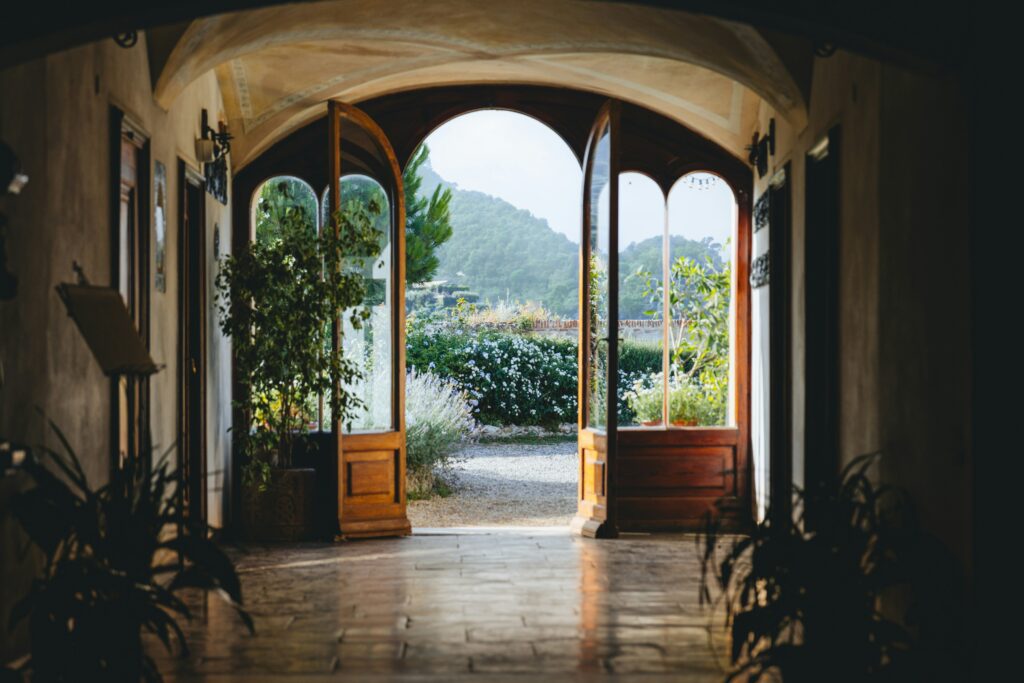
Facades, windows and balconies
Changing how a historic building looks from the outside is where heritage rules bite hardest. On a listed building in Tuscany, enlarging windows, adding a balcony or altering the facade is very difficult and often not possible. On an unlisted building, it depends on the Comune and on any protection on the land.
Inside, there is usually far more freedom. That is where most of our design work happens: new layouts, kitchens and bathrooms, and modern services, set within walls that stay as they are.
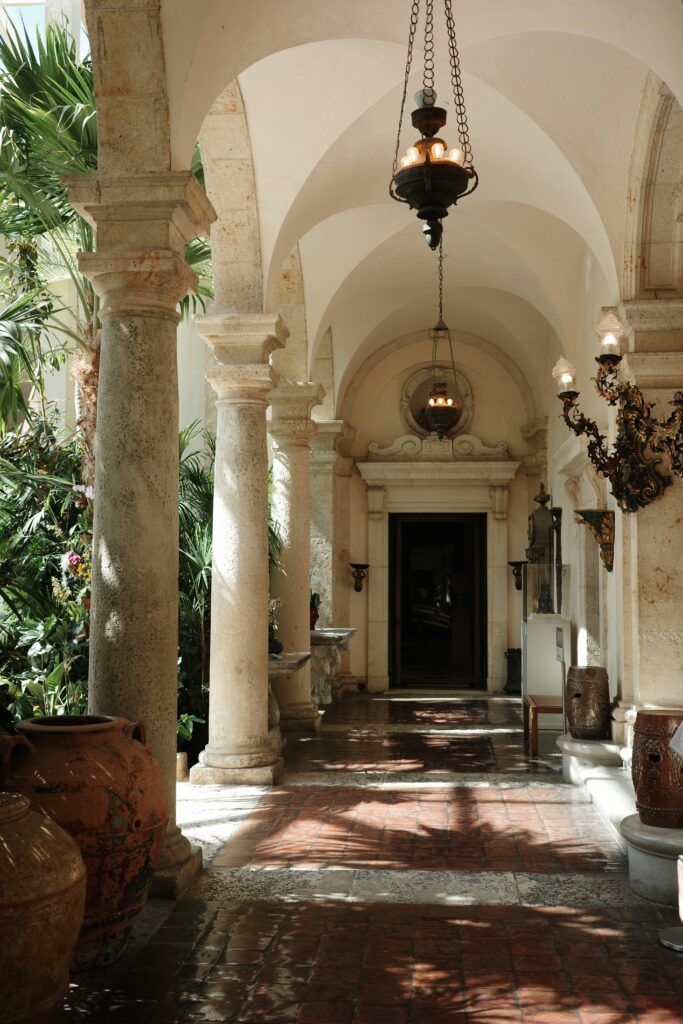
Adding a pool on protected land
A pool feels close to essential in a Tuscan summer, but on protected land it can be the hardest thing to get approved. A traditional pool has a concrete shell, so it counts as new construction.
On one project, an American client bought a ruined villa in the middle of a vineyard and assumed a pool would be straightforward. A recent update to the area’s rules had banned any further new construction on that land, and the Soprintendenza would not approve a conventional pool. Our solution was a biological pool (piscina biologica): cut into the natural rock, with no concrete, and treated more like a natural pond than a building. It was approved and built, and it now sits in the landscape like a clear, natural pool among the vines. This approach has become increasingly common in Tuscany and across Italy.
Buildings that must be restored, not rebuilt
If a building appears on historic plans, the rules may require it to be restored to its original condition rather than demolished and rebuilt. On a villa we are restoring on the Tuscan coast, an old outbuilding that will become a pool house appears on a pre-1940 plan, so it must be restored as it was. Where no archive photographs exist, we work with a historical technician to establish its original form.
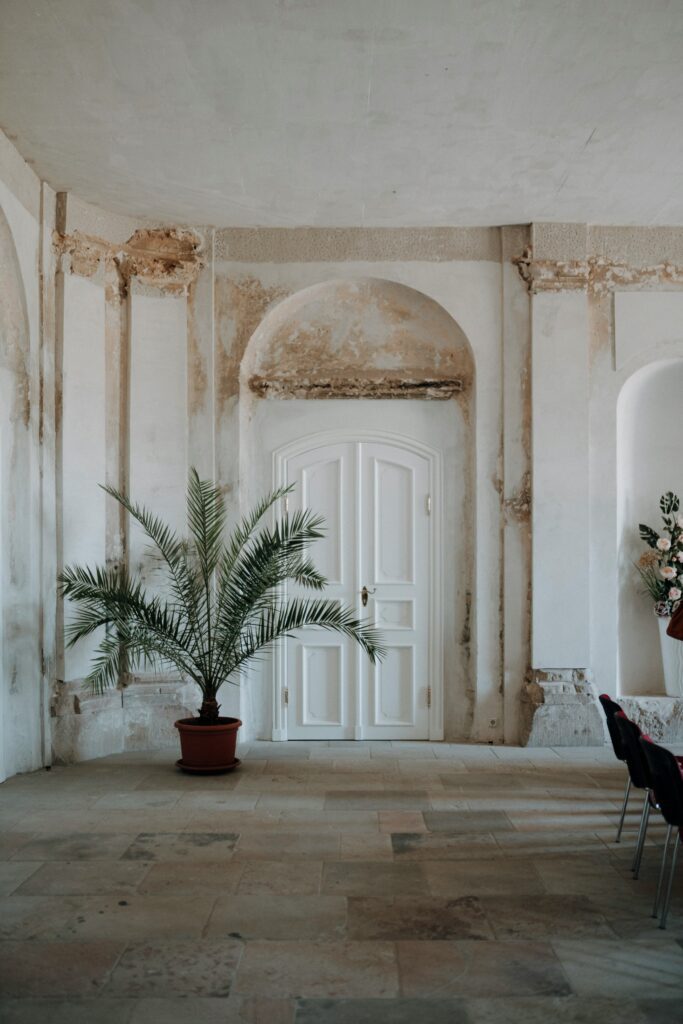
Keeping the character, adding modern comfort
A restoration should keep what makes the building special, from high ceilings and original floors to old beams and lime plaster, while making it comfortable to live in all year.
Italy has four real seasons, with summers that can reach 40°C and cold, damp winters. Heating, cooling and ventilation that genuinely work in tall, thick-walled rooms are essential, and we design them in from the start, so the house feels as good in January as it looks in July.
Frequently asked questions
Can I enlarge a window or add a balcony on a listed building in Italy?
It depends on the Comune and the heritage restrictions on the building. On a listed building in Tuscany, changes to the facade, including bigger windows and new balconies, are very difficult and often not allowed. We check what is possible before you buy or design.
Can I add a pool to a heritage property in Tuscany?
Often, yes, but not always as a conventional concrete pool. Where new construction is restricted, a biological pool cut into the natural rock can sometimes be approved instead. It depends on the land’s protection and the Comune.
Do I need Soprintendenza approval?
If the building is formally listed, or sits within a protected area, the Soprintendenza usually has to approve the works. We identify this at the start and prepare and manage the application.
What is the difference between a restoration and a renovation?
A renovation, or remodel in the US, updates a building for modern living. A restoration also returns original features to their historic condition. Most of our projects combine both: the historic fabric is restored, and the services and layout are brought up to date.

Design and Develop your dream home in Italy.
Studio Casatua
Tuscany, Italy
Email us at
hello@casatua.studio
FAQs